Print on demand removes the need to buy a stack of products before you know whether they will sell. It does not remove product costs, customer service or the need for a reason someone would choose your design.
Here is how to start a print-on-demand business without inventory: choose a specific buyer, create original designs, select a selling channel and fulfilment provider, calculate the margin, and inspect a real sample before launching. Keep enough available cash to cover fulfilment when supplier charges arrive before marketplace payouts.
Table of Contents
Understand who takes the order and who makes the product

Your storefront or marketplace handles the customer-facing sale. The print-on-demand supplier produces and ships the item. In many connected-store arrangements, the customer pays through your sales channel while the supplier separately charges you for fulfilment.
That separation matters. Printful’s billing explanation describes how its fulfilment charges work. A marketplace payout delay can leave you funding orders before the sales proceeds become available.
Before launching, map the timing: customer order, supplier charge, production, dispatch and seller payout. Check holds and reserves imposed by the selling platform. “No inventory” should not be interpreted as “no cash needed.”
Choose a buyer before choosing a product
Begin with a person and a buying situation. A generic mug competes with many alternatives. An original design with a recognisable style and a specific recipient has a clearer reason to exist.
Describe the buyer, occasion, preferred product and likely objections. Then inspect current listings to understand price ranges, delivery expectations and how sellers explain their products. Use that research to understand the market, not to copy someone else’s artwork or listing.
Start with a small collection you can explain in one sentence. Expanding to dozens of unrelated products makes sample checks, descriptions and customer support harder before you know what buyers want.
Use original designs and check the selling rules
Create your own artwork or use assets with a licence that explicitly covers the intended commercial use. Do not assume a font, stock graphic or AI-generated image is automatically suitable for every product and marketplace.
Avoid protected characters, logos, slogans and other material you do not have rights to use. If you sell through Etsy, read its creativity standards and production-partner guidance. Describe your role and the production arrangement accurately.
If you would rather deliver a downloadable file, that is a different fulfilment model. Our guide to selling digital products with no audience explains the starting considerations.
Compare suppliers using the same product and destination
| Supplier | Evaluate for | Compare before choosing |
|---|---|---|
|
Printful
|
Connected-store fulfilment
|
Specific product variant, fulfilment charge and shipping destination.
|
|
Printify
|
A choice of print providers
|
The actual provider, region, sample and total cost.
|
|
Gelato
|
Products across supported fulfilment regions
|
Product availability, delivery estimate and sample result.
|
Printful
Printful is a candidate for connected-store fulfilment. Use its pricing information and the actual product listing to calculate the selected variant, printing options and delivery destination. A general base price is not your final landed cost.
Printify
Printify gives you choices across print providers. Compare the specific provider, product, location, shipping estimate and sample quality. Its plan page helps explain subscription options, but a discount only helps if the resulting total cost and fulfilment quality fit your needs.
Gelato
Gelato is another option to evaluate for your product and delivery regions. Check its current plans alongside product availability and shipping information. Network size alone does not prove that a particular order will arrive faster or cost less.
For all three, order the same kind of sample and compare the complete buying experience. This guide does not claim a hands-on print-quality winner.
Calculate the margin before setting the retail price
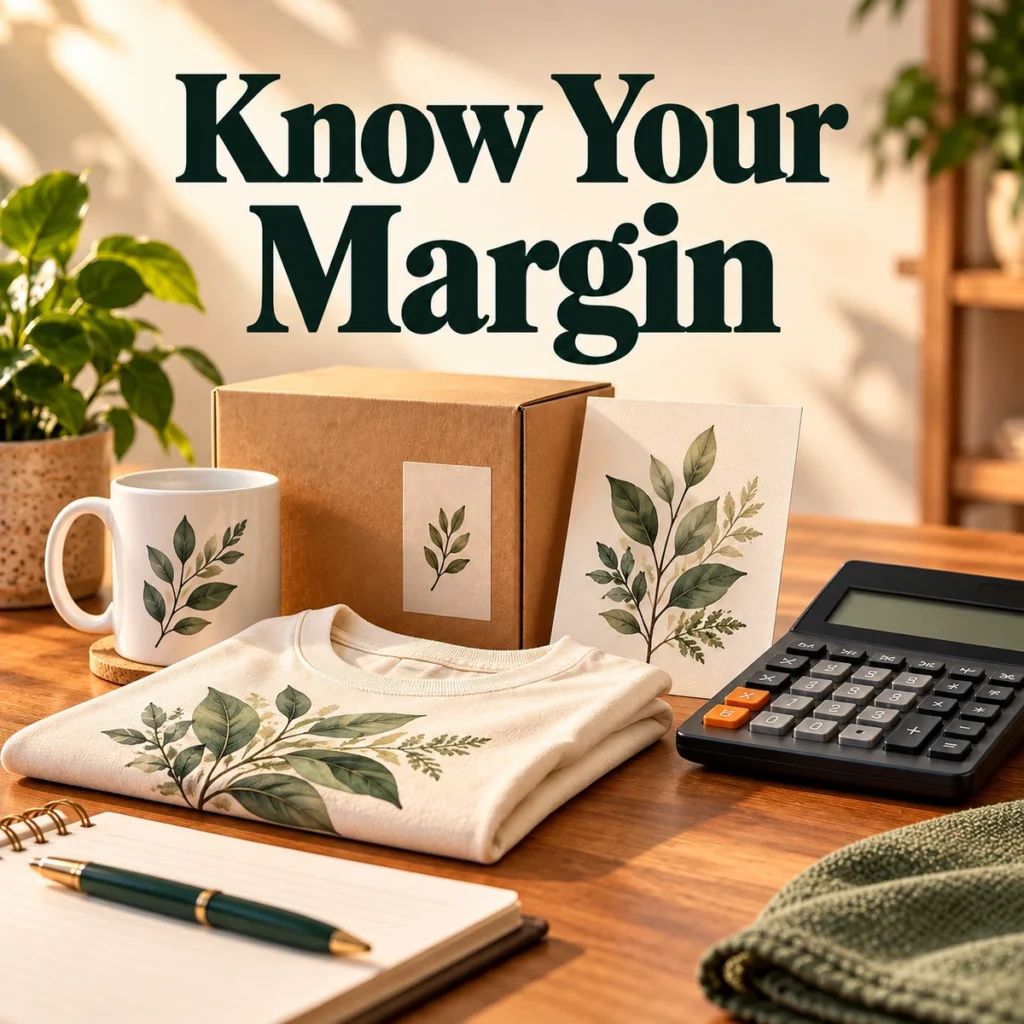
Use this starting calculation: selling price minus production, shipping you absorb, platform fees and payment fees. Then allow for other costs such as refunds, samples, advertising, subscriptions and taxes that apply to your business.
Here is a hypothetical example, not a supplier quote. A product sells for $28. Production costs $12, shipping costs $5 and selling plus payment fees total $3. That leaves $8 before the other costs. A discount or replacement shipment can reduce that amount quickly.
If you use Etsy, its fee policy describes listing and transaction fees, with other charges depending on the account and transaction. Do not calculate profit from the supplier’s product price alone.
Repeat the calculation for each variant and important shipping region. If the margin only works when nothing goes wrong, revise the product, price or sales channel before paying for promotion.
Inspect a real sample before launch
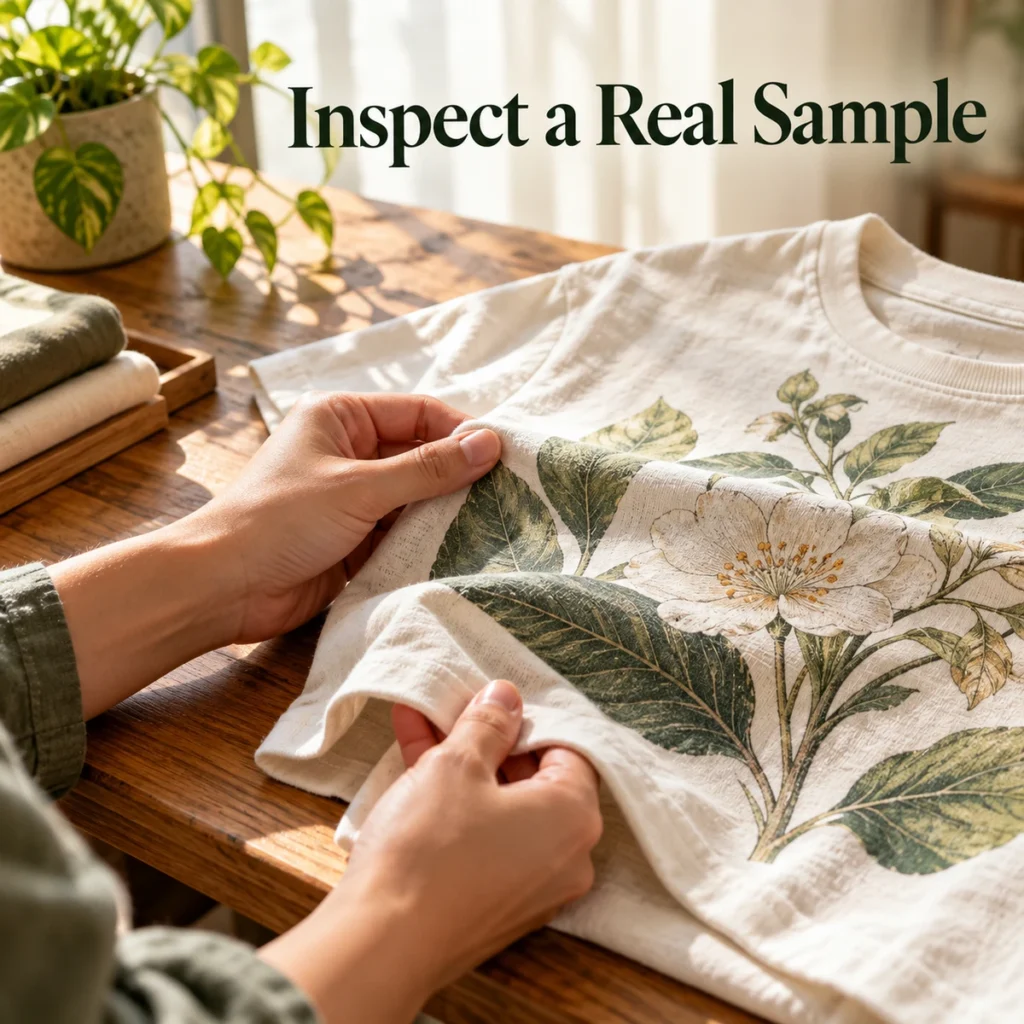
Check print placement, colour, material, packaging and the delivery experience. For clothing, compare the received item with the size information you intend to publish. Follow the care instructions and inspect how the sample holds up to normal handling.
Use your own sample photographs where practical. Supplier mockups can help explain the design, but they should not imply you have personally inspected a product you have never received.
Record the variant and provider used so the live listing matches what you checked. If you later switch providers, treat that as a reason to reassess quality rather than assuming all versions are equivalent.
Launch a small, coherent collection
Write descriptions that answer ordinary buying questions: what the item is, its materials, size, production time, delivery expectations and the applicable return process. Distinguish production time from shipping time.
If you build your own storefront, compare AI website builders for small businesses around commerce requirements. A quickly generated page still needs accurate product information, working checkout and a way for customers to contact you.
A two-week preparation plan

Use the first week to define the buyer, check design rights, compare suppliers and calculate margins. Order the sample early. Use the second week to prepare descriptions, policies, photographs and a small launch channel while you wait for and inspect it.
If the sample has not arrived or fails the check, delay the launch. The calendar is a planning aid, not a reason to sell an unverified product. Begin with a few listings, then use actual questions and sales data to decide what to improve.
Frequently asked questions
Can I start print on demand with no money?
Some services have no required subscription, but samples, fulfilment, selling fees and payout timing can still require cash. Calculate the minimum amount needed for your actual setup before accepting orders.
Is print on demand passive income?
It can reduce manufacturing and inventory work, but design, marketing, customer service and supplier monitoring remain. Earnings are not guaranteed.
Which supplier is best for beginners?
Choose using a specific product, destination, total cost and sample result. There is no reliable universal winner across every product and region.
Start small enough to understand each order’s cost and customer experience. That is a firmer foundation than launching a large catalogue you have never inspected.